
In June this year the Ministry of Foreign Affairs of the Czech Republic awarded Sculpture by the Sea its Gratias Agit Award in recognition of our work ‘for the benefit of the whole society, for the promotion of friendship among nations and for spreading the good name of the Czech Republic abroad’.
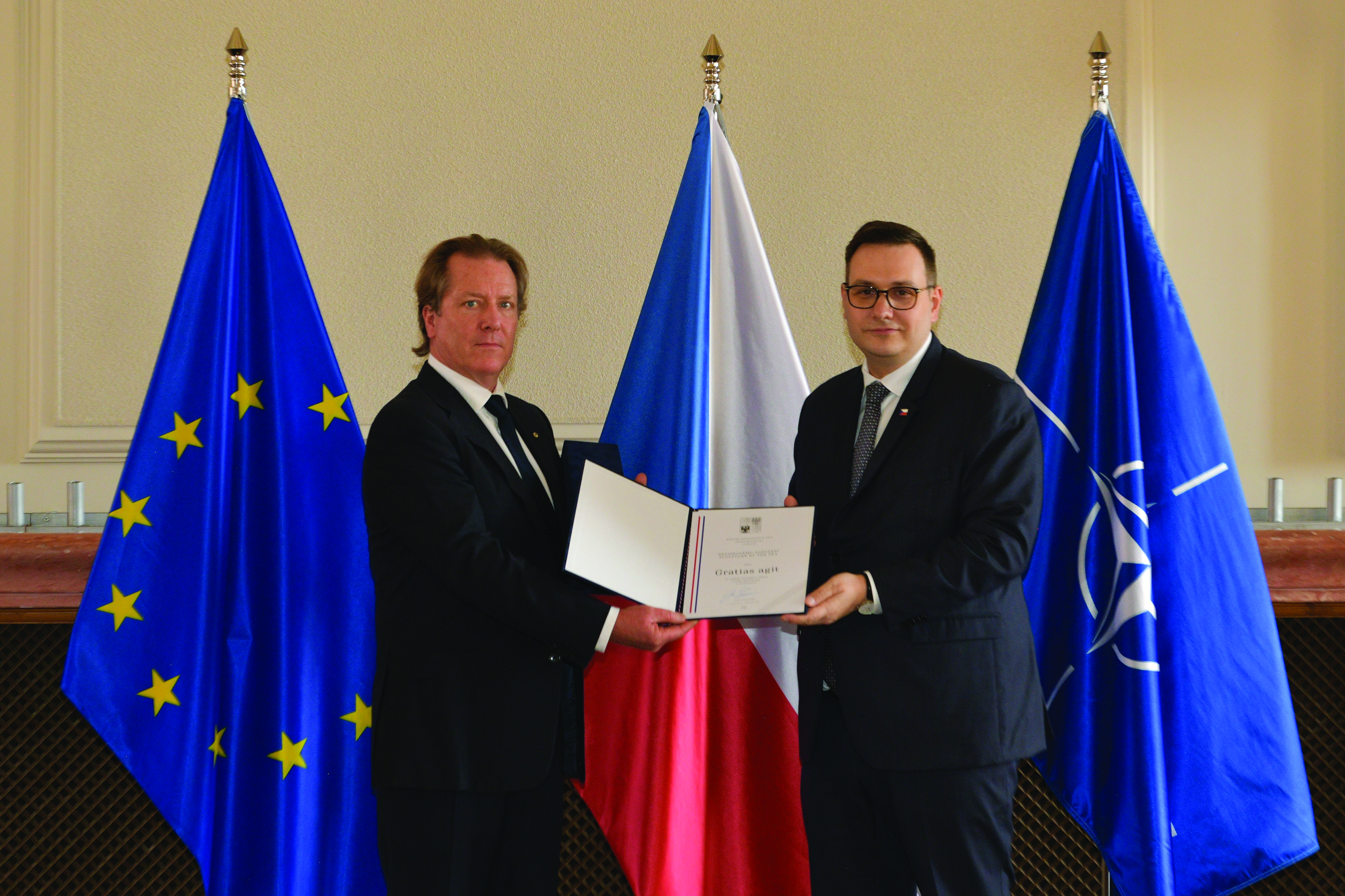
Jan Lipavský, the Minister of Foreign Affairs of the Czech Republic presenting the Gratias Agit Award for Sculpture by the Sea to David Handley AM.
Past recipients of the Gratias Agit Award include former U.S. Secretary of State, Madeleine Albright. This year’s honourees included Adam Michnik, a key leader of the Solidarity/ Solidarność movement that helped end communist rule in Poland.
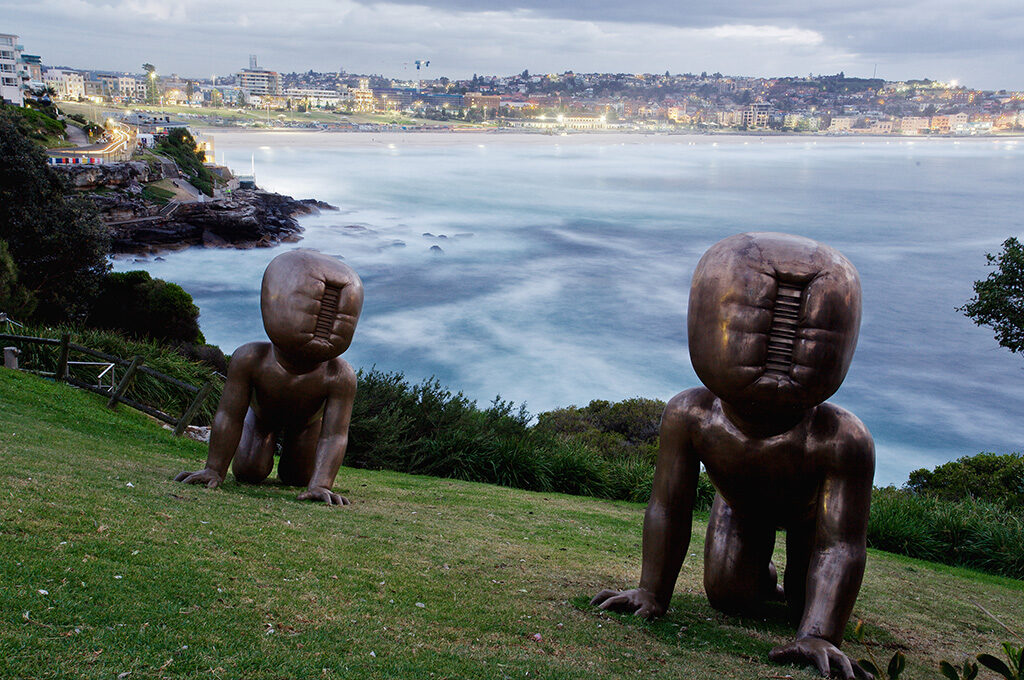
David Cerny, ‘Babies’, Sculpture by the Sea, Bondi 2014. Photo Jarrad Seng
The connection between the Czech Republic and Sculpture by the Sea goes back to the origins of the idea for the exhibition and a two decades long tradition of Czech artists exhibiting in the Sculpture by the Sea along the Bondi coastal walk and at Cottesloe Beach in Perth. Starting with Václav Fiala, who first exhibited in Sculpture by the Sea, Bondi in 2004, receiving the main award, and returning the next year when he also received the major award, 10 Czech artists have exhibited 19 sculptures on the east and west coasts of Australia. They have been drawn by a mixture of the beauty of the exhibition sites, which are particularly well suited to sculpture, the number of visitors, the international reputation of the exhibition and the opportunity to meet and exhibit alongside artists from around the world.
More recently, sculptures by three Czech artists are among the 64 sculptures by artists from 13 countries in the permanent Snowy Valleys Sculpture Trail collection across 150km of southern New South Wales. The artworks by Václav Fiala, Milan Kuzica and Vojtĕch Míča were each partially funded by the Czech Consulate-General in Sydney, in a gesture of international friendship to the people of the Snowy Valleys in response to the Black Summer fires of 2019-20.
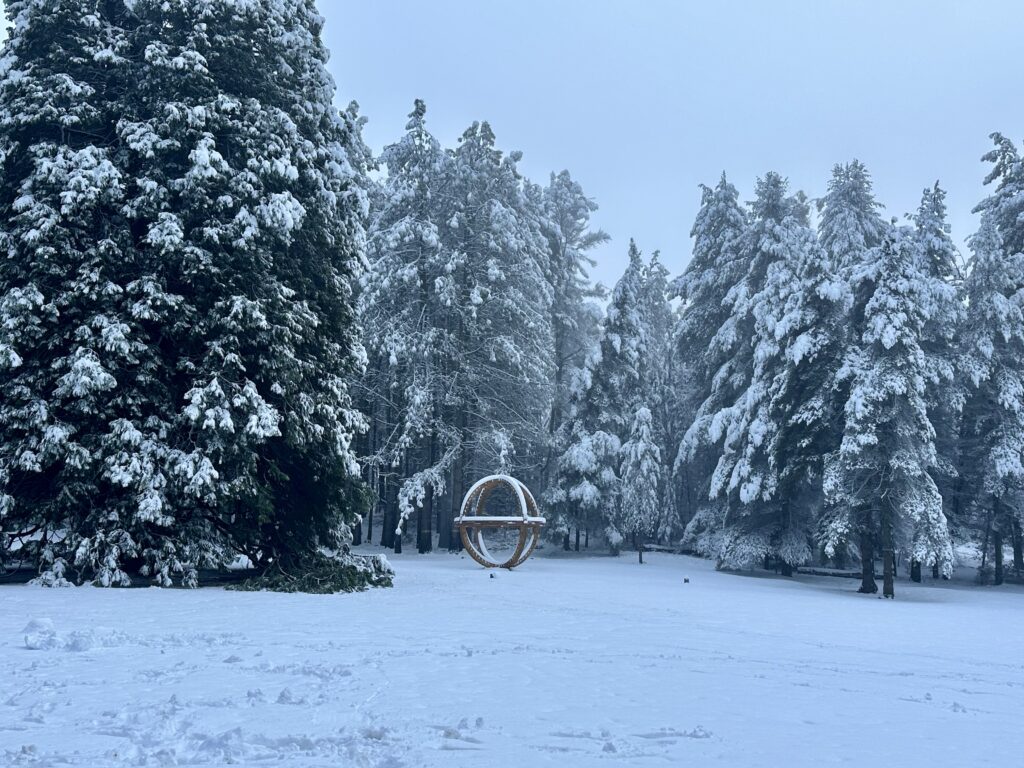
Václav Fiala (Czech Republic), ‘Universum’, in the Sculpture Forest at Pilot Hill Arboretum in Bago State Forest, Snowy Valleys Sculpture Trail. Photo Chantelle Bruton.
A highlight of the ongoing Czech-Australia cultural connections through Sculpture by the Sea is the friendship forged when Václav Fiala and his wife Silvie, stayed with sculptor Stephen King and his family on their farm in Walcha in northern New South Wales to make his sculptures for the 2004 and 2005 Bondi exhibitions. Two of Václav Fiala’s sculptures have a permanent home in the Walcha Open-Air Gallery while Stephen King has exhibited as a guest artist in Fiala’s home town of Klatovy. Their friendship is at the heart of Václav Fiala’s at times hysterically funny book ‘A Bed in Australia’, on his experiences exhibiting in Sculpture by the Sea, with editions published in Czech and English. In a footnote to this wonderful personal story, the Fiala family visited Australia again in 2024 to install ‘Universum’ in the Sculpture Forest at Pilot Hill in Bago State Forest as part of the Snowy Valleys Sculpture Trail. Returning home, their son Robbie built a version of the Tumbarumba pub in a shed next to Václav Fiala’s studio in Klatovy, where it does a roaring trade.
Importantly, in 2019 a Showcase of Czech and Slovak sculpture was held in Sculpture by the Sea, Bondi to celebrate the 30th anniversary of the Velvet Revolution that ended communist rule in Czechoslovakia in 1989. Substantial funding was provided by the Czech Ministry of Foreign Affairs for the eight Czech artists who participated in what was one of the most significant international celebrations of the anniversary of the revolution.+
The connection to the Czech Republic, its history and culture, is at the heart of the origins of Sculpture by the Sea, Bondi. While living in Prague from 1993–1995 David Handley, the Founder of Sculpture by the Sea, visited the Grey Brick* ‘34 / 1993’ outdoor sculpture exhibition in the ruins of Klenová castle by artists who had not been allowed to exhibit during the communist era. This exhibition demonstrated to Handley the drama and theatricality of sculpture who realised sculpture should be the art form for the free to the public cultural event he had been thinking about for several years. Up until that moment the concept of the event had no artistic focus and the thinking had focused on the benefits that flow to society from free to the public cultural events, which add to our sense of community and community goodwill, while being a small antidote to the day to day realities of the commercial world, and facilitating the dreams of artists for their individual and society’s general benefit. In this way the ideas behind Sculpture by the Sea, Bondi had been greatly influenced by the idealism of the Prague Spring of 1968 and inspired by the role of the individual in the Velvet Revolution in 1989.
+ An essay titled ‘Celebrating 30 Years of Freedom’ was published in the Sculpture by the Sea, Bondi catalogue in 2019 and is available at www.sculpturebythesea.com/essays
* The Grey Brick was the code name for the samizdat, or underground, book published illegally in 1987 on the artworks created during the communist years by artists who were not allowed to exhibit by the authorities.